
Source: Florida Administrative Code rule 61-30.805, standards of practice, roof covering (effective October 22, 2013).
A roof inspection checklist covers six areas: the roof covering itself, the flashings, every penetration, the edges and drainage, the attic, and the records that come with the roof. A good inspection works through all six and ends with a written roof inspection report that shows, with photographs, what was found in each.
Below is a working checklist, adapted for the shingle, tile, metal and flat roofs of Southwest Florida. It also covers what Florida’s rules ask of a home inspector, and what a useful report should contain.
If you would rather have it done for you, our roof inspection is free, done by a DBPR-licensed contractor, and you keep the photo report either way.
In this guide
- The roof inspection checklist
- Extra checks by roof type
- The attic: half the inspection
- What a Florida home inspector has to check
- What a roof inspection report should include
- A homeowner’s checklist from the ground
- Roof inspections in Southwest Florida
- Roof inspection checklist questions
The roof inspection checklist
Work from the top down and from the outside in. Each line is something to look at, and the right-hand column is what counts as a finding.
| Area | Check | Signs of trouble |
|---|---|---|
| Roof covering | Shingles, tiles or panels across every slope | Lifted, missing, cracked or slipped pieces; granule loss; displacement |
| Ridges and hips | Ridge caps, hip tiles and their fastening or mortar | Lifted or torn caps, cracked mortar, gaps |
| Flashings | Chimneys, skylights, wall transitions, valleys | Failed sealant, lifted or corroded metal, gaps at the wall |
| Penetrations | Vent stacks, pipe boots, exhausts, solar mounts | Cracked boots, missing collars, rust, open fasteners |
| Edges | Drip edge, fascia, soffits | Rot, stains, loose or missing trim, wind damage |
| Drainage | Gutters, downspouts, valleys, flat-roof drains | Clogs, standing water, granules piling up, overflow stains |
| Underlayment | Where it can be seen at edges or under lifted tile | Brittle, torn or exposed underlayment |
| Attic | Deck underside, ventilation, insulation | Water stains, damp insulation, daylight, mold, blocked vents |
| Interior | Top-floor ceilings and walls | Brown rings, bubbling paint, sagging drywall |
| Records | Roof age, permits, past repairs | No permit on file, unknown age, repeat repairs in one spot |
Two items on that list deserve more time than the rest. Flashing failures around chimneys, skylights, vents and wall transitions are among the most common sources of water intrusion in Florida homes, and the one most often missed. And the underlayment, which nobody can see from the street, decides whether a tile roof actually keeps water out.
Extra checks by roof type
Asphalt shingle
- Tabs that lifted in the wind and resettled. They often look fine and leak at the next heavy rain.
- Granule loss, and granules collecting in gutters or at downspouts.
- Algae streaks on shaded slopes, which hold moisture against the shingle.
Tile
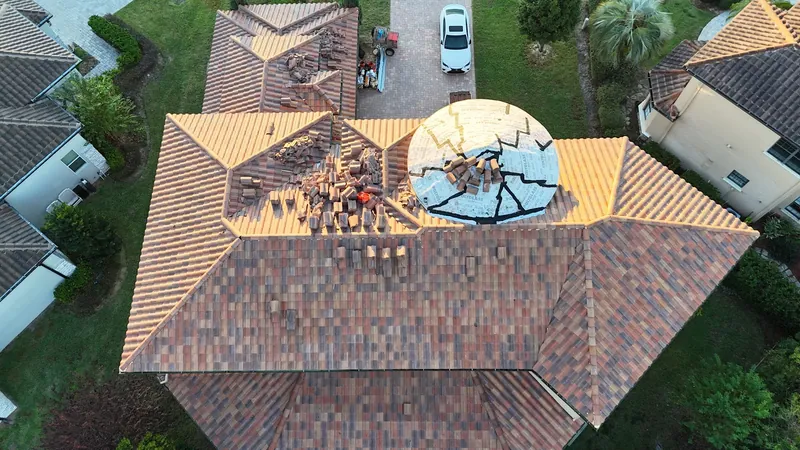
- Cracked, broken or slipped tiles, especially along hips, ridges and valleys.
- The underlayment wherever it can be seen. It lasts twenty to thirty years, while the tile can look perfect for much longer.
- Where the inspector steps. Tile must be walked in the right places or it cracks.
Metal
- On exposed-fastener panels, screws backing out and washers that have aged.
- Corrosion on trim, flashings and fasteners, especially near salt water.
- Seams and panel ends on standing seam, where the fasteners sit hidden.
Flat or low-slope
- Standing water a day or two after rain. That is a drainage problem, not the weather.
- Seams, and the flashing around every curb, drain and pipe.
- Blisters, splits or a worn surface on the membrane.
We also compare what is on the roof against the current Florida Building Code. That matters most on older homes, where a roof installed before the 2002 code updates may fall short of today’s wind requirements even though it has never leaked.
The attic: half the inspection
Many leaks show in the attic long before they reach a ceiling. On a dry day the attic tells you where water has been; after a storm it can show you where water is coming in. Look for:
- Dark stains or soft spots on the underside of the roof deck.
- Damp, compressed or stained insulation.
- Pinpoints of daylight through the deck.
- Blocked soffit vents or ridge vents, and any sign of trapped heat or moisture.
Florida’s home inspection rule lists attic ventilation and attic insulation as part of the roof covering system, which tells you how closely the two are linked.
What a Florida home inspector has to check
If you are buying a home, the roof section of the general home inspection follows a state rule. Under Florida Administrative Code rule 61-30.805, the roof covering system includes roofing materials, flashings, skylights, chimneys and roof penetrations, roof drainage, and attic ventilation and insulation. The inspector must inspect all of the visible and readily accessible parts.
The same rule says the inspector does not have to walk on the roof when the slope is too steep, there is no safe access, the weather or the roof’s condition makes it unsafe, walking could damage the covering, or it would create liability. Many tile roofs meet at least one of those tests.
The InterNACHI home inspection standards go further: the inspector is not required to walk any roof surface, predict the roof’s service life, perform a water test, or confirm that the roofing was fastened and installed properly. That is reasonable for a general inspection, but it leaves a gap. A roofer on the roof, looking at fastening, flashings and underlayment, produces a different document.
Sources: FAC rule 61-30.805; InterNACHI Home Inspection Standards of Practice, section 3.1, Roof.
What a roof inspection report should include
The report is the part you keep, so it should be usable by someone who was not there: an insurer, a buyer, or you, two years from now. A good roof inspection report covers:
- The basics. Date of the inspection, property address, who inspected it and their license number.
- The roof. Covering type, approximate age where known, slopes and any flat sections.
- Photographs. Every slope, plus close-ups of each finding, dated.
- Findings by area. Covering, flashings, penetrations, edges, drainage, attic, each with a note even when it is fine.
- Code observations. Anything that falls short of the current Florida Building Code.
- Recommendations in order. What needs doing now, what can wait for a season, and what to watch.
Ours is a full photo report with written findings, in a form that supports a renewal, a sale or a wind mitigation booking. If the roof is fine, the report says so. One boundary to know: insurer forms such as the wind mitigation form OIR-B1-1802 are completed by a licensed wind mitigation inspector, and our insurance roof inspection guide explains the inspections carriers ask for and what Florida’s roof age law says.
A homeowner’s checklist from the ground
You do not need to climb a ladder to keep an eye on your roof between inspections. A few minutes after each big storm is enough:
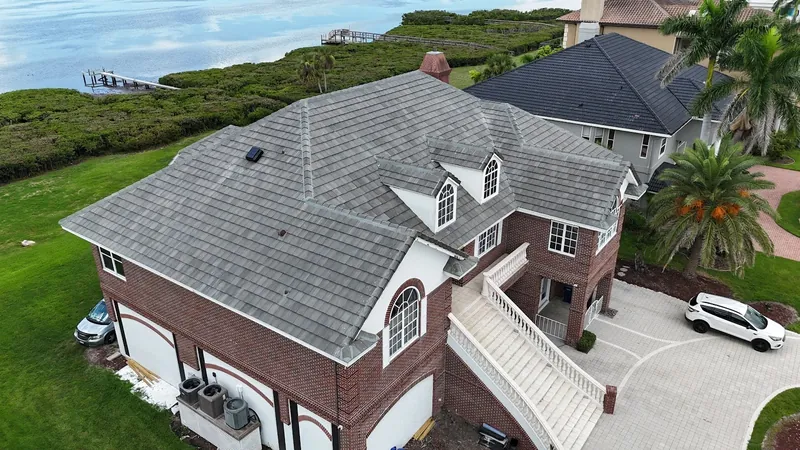
- Walk around the house and look at each slope, ideally with binoculars.
- Check the yard and gutters for shingle pieces, tile fragments or piles of granules.
- Look up the attic hatch with a flashlight for stains or damp insulation.
- Check top-floor ceilings for new stains.
- Take dated photos so you can compare after the next storm.
Our roof maintenance guide turns those checks into a year-round calendar, and our roof inspection cost guide covers what a paid inspection runs and when it is free.
Roof inspections in Southwest Florida
We inspect roofs across the five counties we cover, including Sarasota, Lakewood Ranch, Venice and Port Charlotte in the north, and Fort Myers, Bonita Springs and Naples in the south.
Book a free roof inspection and we work through every line of this checklist on your roof, then hand you the photographs and the written report, whether or not you ever hire us.
Roof inspection checklist questions
What is on a roof inspection checklist?
Six areas: the roof covering (shingles, tiles, panels or membrane), the flashings, every penetration, the edges and drainage, the attic, and the roof's records such as age and permits. Each area gets checked for specific signs of trouble, and the findings go into a written report with photographs.
What does a roof inspection report include?
The date, address and the inspector's name and license, the roof type and approximate age, photographs of every slope and each finding, notes on each area of the roof, anything that falls short of the current Florida Building Code, and recommendations in order of urgency.
Do home inspectors walk on the roof in Florida?
Not always. Florida Administrative Code rule 61-30.805 says a home inspector is not required to walk the roof when the slope is too steep, there is no safe access, conditions make it unsafe, or walking could damage the roofing. The inspector must still inspect the visible and readily accessible parts.
Is a roof inspection the same as a four-point or wind mitigation inspection?
No. A roof condition inspection looks at the roof's condition and what needs doing. Four-point and wind mitigation inspections are on the insurer's own forms; the wind mitigation form OIR-B1-1802 is completed by a licensed wind mitigation inspector. Our insurance roof inspection guide explains the differences.
Can I inspect my own roof?
From the ground, yes. Walk around with binoculars, check gutters for granules and debris, look in the attic for stains, and take dated photos after storms. Walking the roof yourself is risky, and a tile roof can crack underfoot, so leave the close inspection to a licensed roofer.