
Metal is where this crew specializes. Standing seam, 5-V crimp and exposed fastener systems across residential and commercial work — it is the roofing type the team has the most hands-on experience with, and the category where system selection and installation technique matter most to how the roof performs twenty years out.
A standing seam roof installed correctly here will outlast several shingle replacement cycles, earn the strongest wind mitigation credits available, and ask for essentially nothing beyond an occasional inspection. If you are weighing a long-term roofing decision rather than a cheapest-now one, it deserves serious evaluation.
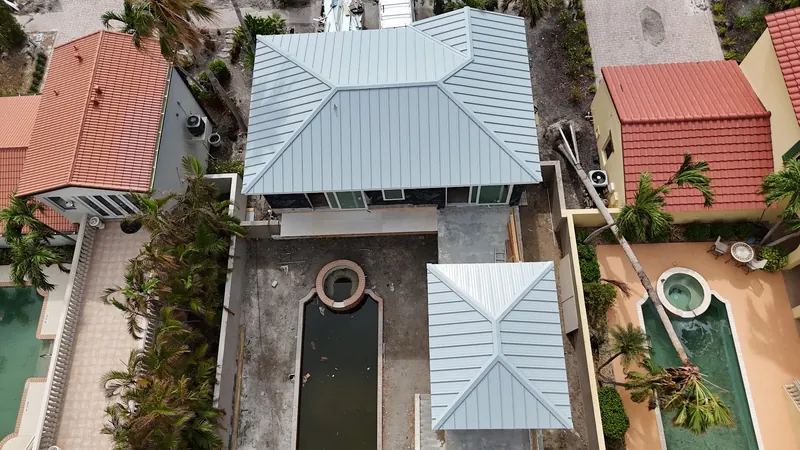
Three Systems
Standing seam
The premium residential system. Panels interlock at raised seams with fasteners concealed beneath the joints, so nothing penetrates the panel face and nothing is exposed to weather. That eliminates the most common failure mode in metal roofing — fastener penetrations leaking as their gaskets age. Forty to seventy years, and the system we recommend for most residential replacements.
5-V crimp
A traditional Gulf Coast profile with a long history in this market. Durable, proven, visually right on coastal vernacular architecture, and meaningfully cheaper than standing seam.
Exposed fastener panels
The most cost-effective entry into metal. Screws driven through the panel face, which is simpler and cheaper to install but needs periodic fastener inspection. Best suited to agricultural, commercial and accessory structures rather than a main residence.
Aluminum, Not Steel, Near the Water
For every coastal and barrier island installation we specify aluminum rather than steel, and this is the part of the page most worth reading if you are comparing quotes.
Aluminum does not rust. In a salt air environment that is not a refinement, it is the whole question. Galvalume-coated steel performs excellently in inland markets and faces accelerated corrosion close to the water, which shortens its effective life well below its rated potential.
So a lower price on a steel system near the Gulf is not a better deal. It is a system likely to need attention within a decade that an aluminum one simply will not. If a quote in front of you does not say which metal it is, that is the question to ask before you compare the numbers.
Metal and Your Insurance
Metal qualifies for significant wind mitigation credits in Florida, and standing seam with concealed fasteners in particular scores well on the roof deck attachment and roof covering categories of the inspection. In the current market, where premiums are a real and rising concern, those credits can offset a meaningful part of the cost difference against shingles across the life of the roof.
We go through the wind mitigation implications on every metal quote. If insurance saving is your main motivation, say so and we will show you exactly which system and which details maximize the credits, rather than leaving you to discover afterwards that a cheaper specification cost you the discount. The broader picture across all materials is on the roof installation page.
Why We Are Known for Metal
- It is the team’s deepest expertise, across all three system types rather than one profile sold to everyone.
- Wind performance well above requirement. Properly installed metal resists speeds comfortably beyond what these counties’ codes ask for.
- The right metal for your address. Aluminum on the coast, and a straight explanation of why, rather than one specification applied everywhere.
- Almost no maintenance for decades, which is a real part of the cost comparison and is usually left out of it.