
An installation and a replacement overlap heavily, and the distinction that actually matters is which end you are standing at. A replacement is a decision about a roof that has reached the end of something. An installation is a specification exercise — what goes on, in what order, fastened how — and it applies equally to a new build and to the new roof that follows a tear-off.
This page is about that second half, because it is where the long-term performance is decided and where quotes differ from one another in ways that are not visible on the price line. Material selection (shingle, tile or metal), underlayment specification, fastening pattern and flashing detail all carry consequences in a climate that combines year-round UV, salt air and an annual named-storm season.
We install on new construction and on existing homes across all five counties, with every component selected to meet or exceed the 2023 Florida Building Code for the region the house sits in — which is not the same requirement across our whole service area.
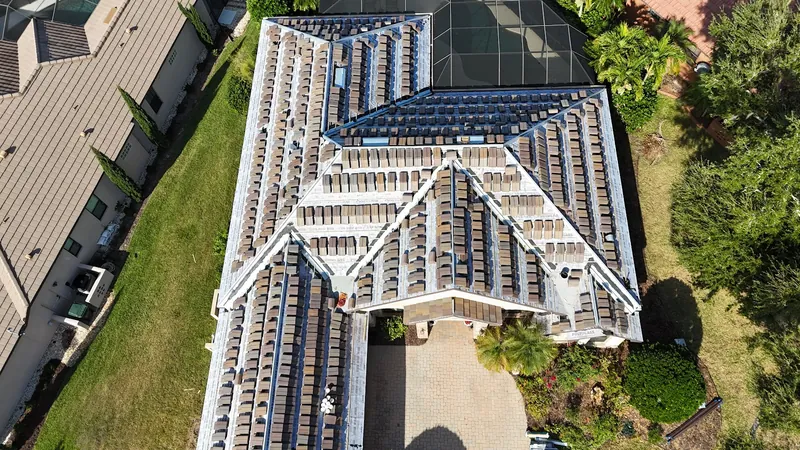
Three Starting Points
New construction
Roofing installed as part of a new build, coordinated with the builder’s program and inspected alongside the rest of the construction permit. The advantage here is that everything is a choice rather than a constraint: geometry, material and the wind mitigation features can all be specified from the start rather than worked around.
Full replacement installation
Complete tear-off and new installation on an existing home, which is the most common job we do. Deck condition is confirmed before anything new goes down and any soft or water-damaged sheathing is repaired within the scope. Most residential installations take one to three days once the permit is in hand.
Wind mitigation-optimized installation
The same job specified deliberately around maximizing insurance credits, for owners whose main driver is the annual premium rather than the roof itself. Hip geometry guidance where the structure allows it, secondary water barrier, enhanced deck fastening.
The Standards We Build To
Two realities shape every installation here. The first is that most of our service area sits inside Florida’s Windborne Debris Region, with design wind speeds running from roughly 130 to 150 mph across the northern counties and 160 to 170 mph in Collier. That is not a small difference, and a specification that is correct in Bradenton is not automatically correct in Naples.
The second is rainfall. Underlayment has to be properly lapped and sealed rather than merely present, because the intensity of a Gulf Coast afternoon storm finds any lap that was treated as a formality. Deck sheathing goes down with the fastening patterns high-wind zones require, and every material carries Florida Product Approval before it arrives on site.
Geometry, and Why It Shows Up on Your Premium
The most consequential decision available on a new installation is often the roof shape, and it is the one homeowners are least often told about. A hip roof earns significantly larger wind mitigation credits than a gable, because it distributes wind load across four slopes instead of presenting a flat end to it. On a new build that is a live choice. On a replacement it usually is not, but it is worth knowing which side of it you are on.
The secondary water barrier is the other big one — a sealed membrane over the deck, under the primary covering, that keeps water out even if the covering above it is damaged. It is among the single largest credit-generating features in Florida’s wind mitigation program, and it is standard on every applicable installation we do rather than an upgrade line.
We go through all of this at the quote stage, because a decision made during installation is what turns into a discount later, and nobody applies those credits retroactively without a wind mitigation inspection to document them.
Included on Every Installation
- Full permitting and inspection. Application, every required milestone inspection, and the Certificate of Completion close-out, in the correct jurisdiction for your address.
- Florida Product Approved materials. Everything installed carries state approval and meets the wind rating required where the house actually is.
- Deck repair inside the scope. Damage found once the old roof is off is repaired as part of the project rather than raised as a change order at the point you have no alternative.
- Wind mitigation conversation before, not after. Which features maximize your credits, what they cost, and whether they are worth it on your particular policy.