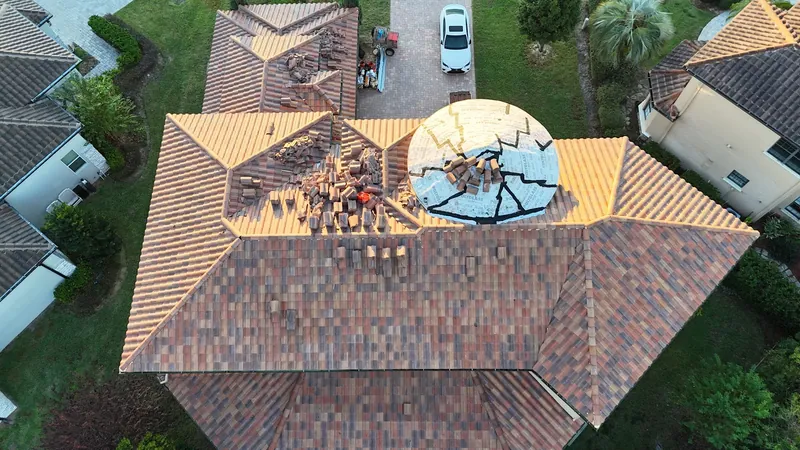
Collier County design wind speeds run 160 to 170 mph, higher than anywhere else we work, on a market built around Mediterranean tile.
Naples sits in Collier County, where the design wind speed requirement runs from 160 to 170 mph — notably higher than the 130 to 150 mph that applies across most of the rest of Southwest Florida. Combine that with direct Gulf exposure and a housing market where Mediterranean-style tile roofing is deeply established, and Naples presents some of the more demanding roofing conditions we work in.
The wind requirement is the part most worth understanding before you compare quotes. It changes deck fastening patterns, the fastening schedule for the covering, the underlayment specification and which products carry the necessary Florida Product Approval. A contractor running one statewide specification is not meeting Collier’s requirement, they are meeting somebody else’s.
We serve Naples from our Estero base with the material specification and installation standards this market actually requires, plus the permitting experience to work through the additional review processes common in the gated and coastal communities here.
The defining material of Naples’ housing stock, and the one where the underlayment beneath it is the real service clock at twenty to thirty years. A tile roof that looks immaculate from the street and is leaking is not a tile failure. Where the tile is sound we lift it, replace the underlayment and reinstall the same tile.
Full replacement specified to Collier’s wind requirements rather than to a generic Florida standard. Deck inspection and repair inside the scope, and the wind mitigation features documented so the credits reach your policy.
Where the association permits it, aluminum standing seam is a strong answer in this wind zone and on coastal exposure. Concealed fasteners, no penetrations through the panel face, and the highest wind mitigation credits of any covering.
Free, documented and without obligation. On a Naples tile roof it is also the only way to know the underlayment condition, which is invisible from the ground and is what actually determines whether the roof is sound.
Collier’s design wind speed is the highest requirement in our service area, and it is a structural specification rather than a marketing number. It drives how the deck sheathing is fastened, how the covering is fastened to it, how the underlayment is lapped and sealed, and which products are approved for use at all.
The practical effect on a homeowner is that quotes are less comparable here than elsewhere. Two bids can differ substantially in price and both claim the same covering, with the difference sitting entirely in the fastening schedule and the product approvals. Asking what wind rating and what fastening pattern are in the quote is the fastest way to find out whether you are comparing like with like.
It also raises the value of the wind mitigation credits. Where the requirement is highest, the discount for exceeding it is worth most, which is why we go through roof geometry, secondary water barrier and deck attachment on every Naples quote rather than only on request.
Gated and Coastal Community Review
A great deal of Naples sits inside gated communities and coastal neighborhoods with their own review processes governing roofing material, profile and color. Those requirements vary considerably between communities, and in some the constraints are tighter than anywhere else we work.
We prepare the package boards ask for — product data sheets, physical color samples, a clear profile statement — as part of the project. Where a board is likely to object, better to establish it before tile is ordered on a long lead time. And on a sound tile roof, an underlayment-only replacement with the original tile reinstalled generally avoids the review question entirely, because nothing visible changes.
Salt Air on the Coastal Side
Naples’ Gulf-adjacent property carries the same corrosion problem as the rest of this coast, and it works on the roofing system’s metal components long before it touches the covering. Flashings, fasteners, drip edge and vent boots corrode quietly, and the leak that eventually appears around a penetration is the end of a process that started years earlier.
On coastal Naples work we specify corrosion-resistant flashing as standard, and any metal roof is aluminum rather than steel. Inland the recommendation is different and less expensive, which is the point of assessing each property rather than applying one answer to the city.
Why Naples Homeowners Call Us
Specified for Collier, not for Florida generally. Fastening patterns, underlayment and product approvals matched to a 160 to 170 mph requirement.
Tile is the material we do most. Clay and concrete, barrel and flat, mortar-set and mechanically fastened, plus standalone underlayment replacement where the tile is sound.
Community review handled. Product data, samples and profile statements prepared in the form boards ask for, as part of the job rather than left to you.
Wind mitigation credits pursued. Where the code requirement is highest, the discount for exceeding it is worth most. We go through it on every quote.
Why are wind requirements higher in Naples than other parts of Southwest Florida?
Collier County's design wind speed requirement of 160 to 170 mph reflects Naples' direct Gulf of Mexico exposure and storm history, and it's meaningfully higher than the 130 to 150 mph range common further north in Sarasota and Manatee counties. This affects material selection, fastening patterns, and the engineering documentation required for permit approval.
Does my Naples property need Coastal Construction Control Line review?
If your property sits seaward of the state's Coastal Construction Control Line, roofing work involving structural changes may require additional review from the Florida Department of Environmental Protection, which can add several weeks to the permitting timeline. We assess this during your free inspection and build the timeline accordingly.
Do you handle roofing in gated communities like Port Royal or Pelican Bay?
Yes. Many Naples gated communities run their own architectural pre-approval process in addition to standard city permitting. We prepare the documentation these communities typically require and factor the additional review timeline into your project schedule.
What roofing materials hold up best to Naples' salt air?
For metal roofing, aluminum is essential over steel given Naples' direct Gulf exposure. For any roofing material, stainless or copper fasteners and corrosion-resistant flashing details meaningfully outperform standard hardware in this environment. We specify materials for Naples projects with this exposure level in mind, not a generic Southwest Florida standard.
What Our Customers Say
Reviews left by Florida Gulf Roofing customers on Google, shown word for word.
Mike and Troy came to my house while they were doing work in my neighborhood and told me there were cracked and damaged tiles on my roof. My husband was skeptical at first but they showed us photos and explained exactly what needed doing and why. They were honest about what could wait and what could not. We are very glad we used them.
Selena Lavigne
I highly recommend this service. The work was of expert quality, with meticulous attention to every detail. They kept me informed and promptly addressed any concerns. From start to finish, their professionalism was impeccable, and they answered all my questions thoroughly.
Judy Mors
Florida Gulf Roofing is the absolute BEST! Very professional, fair pricing, and overall just a great experience. I highly recommend using this company.