
Roof Maintenance in Southwest Florida

The cheapest roofing work you will ever buy is the work that stops a small thing becoming an interior water damage claim.

This climate is harder on roofing materials than most homeowners give it credit for, and the damage it does is gradual rather than dramatic. UV degrades shingle granule coatings and tile sealants year-round, not only through the summer. Humidity accelerates algae and moss on anything shaded. Salt air off the bay and the Gulf corrodes metal flashings and fasteners noticeably faster than it does inland — which is why two identical roofs, one three streets closer to the water, do not age at the same rate.

None of that announces itself. It shows up as a leak, two or three wet seasons after the point at which it was a twenty-minute job.

We run annual and bi-annual maintenance for residential and commercial owners across the five counties. If it has been more than a couple of years since anyone was actually on your roof, start with a free inspection instead — there is no sense buying a maintenance plan before you know the baseline.
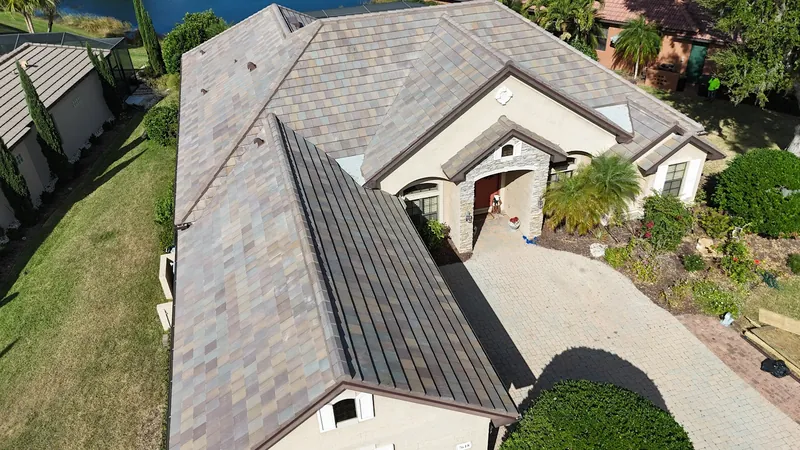
Aerial view of a blended flat-tile roof with a standing-seam metal accent section on a Southwest Florida home

What a Visit Involves

A full evaluation and light service, not a look from the driveway.

Condition assessment

Shingles, tiles or panels, plus flashings, ridge caps, gutters, soffits and fascia. You get a written condition report afterwards with photographs, dated. That documentation has a second use: it shows you have maintained the property, which is worth having at renewal and when you sell.

Preventive repairs on the spot

Loose flashings resealed, exposed fasteners treated, cracked or slipped tiles reseated, debris cleared out of valleys and gutters. These are handled during the visit rather than written up as a separate callback, which is most of the point of having somebody come regularly.

Biological growth treatment

The black streaking that appears on north-facing and shaded roofs is not only cosmetic. It holds moisture against the surface and accelerates granule and coating loss. It is far easier to deal with early than once it is established.

Why It Matters More on a Tile Roof

Tile is close to permanent. The underlayment beneath it is emphatically not — twenty to thirty years, regardless of how good the tile still looks from the street. That gap is the single most misunderstood thing about tile roofs in this market, and it produces a specific failure: a roof that looks immaculate and is leaking.

Catching a failing underlayment during a scheduled visit and planning a targeted underlayment replacement is a manageable job. Discovering it because water came through a ceiling is a much larger one, and it usually arrives with interior damage attached.

The same logic holds across every material. An issue found on a scheduled visit is a line item. The identical issue found as an active leak is an emergency.

How Often

Annually for most roofs. Twice a year for anything over fifteen years old, and for properties near the water where salt exposure is higher. Before hurricane season in June is the best single slot in the calendar, because it puts the roof in its best condition heading into the months that test it hardest.

For commercial flat roofs the recommendation is firmer: twice a year, once before the season and once after the wet season ends. Flat roofs collect debris, move more with temperature, and are far more vulnerable to a blocked drain than a pitched roof is. See flat roofing for what that involves.

What You Get Out of It

  • A dated written report every visit, from a licensed contractor, with photographs. Useful at renewal and useful when you sell.
  • Minor repairs done during the visit wherever they can be, rather than scheduled as a second job with a second call-out.
  • Fewer claims. A well-maintained roof is less likely to generate one, which matters in a market where a claim can bring a premium rise or a non-renewal behind it.
  • Timed to the seasons here, around hurricane season and the wet season, rather than to a generic annual reminder.

Roof Maintenance Questions

How often should I have my roof maintained in Sarasota?

We recommend annual maintenance for most Sarasota roofs, and bi-annual for roofs over 15 years old or those on properties near the water where salt air exposure is higher. Before hurricane season in June is an ideal time for a maintenance visit. It ensures your roof is in the best possible condition heading into the months when it faces the most stress.

What does roof maintenance cost in Sarasota?

Maintenance visit pricing depends on roof size, material, and condition. Contact Florida Gulf Roofing for a quote specific to your property. The cost of annual maintenance is consistently lower than the cost of repairing the water damage that results from deferred maintenance. A failed flashing seal or a cracked tile that goes unaddressed through a wet season can cause thousands of dollars of interior damage.

Does roof maintenance help with my homeowners insurance in Sarasota?

Yes, in two ways. First, a well-maintained roof is less likely to generate a claim, which helps you avoid the premium increases and non-renewal risk that follow a claim in Florida's current insurance market. Second, dated documentation of regular professional maintenance from a licensed contractor demonstrates that you have taken reasonable steps to maintain the property, which is worth having at renewal and when you sell.

My tile roof looks fine from the ground. Do I still need maintenance?

Yes. Tile is one of the most durable roofing materials available, but the underlayment beneath it is not. The underlayment on a tile roof typically needs replacement every 20 to 30 years regardless of how the tile looks from the ground. Flashings, ridge caps, and penetration seals also deteriorate at their own rate, independent of the tile's visible condition. The only way to know the actual condition of those components is to get a licensed contractor on the roof.

Is a maintenance plan worth it if my roof is newer?

For roofs under 10 years old in generally good condition, annual maintenance is still worthwhile but less urgent than for older roofs. The bigger value for newer roofs is establishing a documented maintenance history early, which is useful for insurance purposes and gives you a clear baseline to compare against as the roof ages. Many homeowners start light, with a single annual visit, and increase frequency as the roof gets older.

What Our Customers Say

Reviews left by Florida Gulf Roofing customers on Google, shown word for word.

We had some damage from the hurricanes. Mike and Troy came to inspect the roof and assess the damage. They were able to make repairs on a few missing shingles and even matched the original shingles. I appreciate the fact they did not try to upsell me something that I did not need. I would definitely recommend them to anyone needing a new roof or roof repairs.

Greg Shuey

Florida Gulf Roofing helped me with the insurance process after Milton. Troy did exactly what he said, the crew did an excellent job on site: clean, professional and on time. I could not have asked for a better experience during a stressful few months.

Olivia Mudry

My roof was leaking in many places causing water damage inside the house. Mike and his crew came out and installed a tarp the next day. After dealing with the insurance company they installed a new roof. They were professional, on time and cleaned up after themselves every day. I highly recommend them.

Larry R Smith

Read our reviews on Google

Get a free roof inspection

No cost, no pressure, and an honest answer about whether you need a repair or a replacement.