
Sources: Florida Climate Center, thunderstorms; NOAA National Severe Storms Laboratory, hail basics; IBHS, is it hail damage?
A hail damage roof inspection looks for a random pattern of impact marks, bruised spots that feel soft when pressed, and cracked shingles or tiles, with the ridge caps checked first. The aim is to tell real hail damage apart from normal wear, and to find it before it turns into a leak.
Hail is less common here than in the Plains, and most of what falls in Florida is small. But the storms that do bring hail are the strongest ones, and the damage is easy to miss from the ground. This guide covers what hail does to each kind of roof, what is not hail damage, and what to do after a storm.
If you want a licensed roofer to look, our free roof inspection includes storm damage inspections, with dated photographs and a written report.
In this guide
- Does Florida get hail?
- What hail damage looks like on a roof
- What is not hail damage
- Why hail damage matters even without a leak
- What to do after a hail storm
- What a hail damage roof inspection includes
- Contractors who knock after a storm
- Storm inspections in Southwest Florida
- Hail damage questions
Does Florida get hail?
Yes, but less than you might expect. The Florida Climate Center notes that no part of the country has more thunderstorm activity than Florida, with more than 80 thunder days a year in the western half of the peninsula. NOAA’s National Severe Storms Laboratory adds that although Florida has the most thunderstorms, Nebraska, Colorado and Wyoming usually have the most hailstorms.
The reason is altitude. The freezing level in a Florida thunderstorm is so high that hail often melts before it reaches the ground, the Florida Climate Center explains. Large hail still happens: it counts about a dozen reports of hail over 3 inches in Florida, including softball-size hail in Lake Wales in 1996.
NOAA’s storm lab treats hail of 1 inch, about the size of a quarter, or larger as severe. Stones of 1 to 1.75 inches fall at roughly 25 to 40 mph. Hail and strong wind often come from the same storm, so a good inspection looks for both.
What hail damage looks like on a roof
The Insurance Institute for Business & Home Safety (IBHS), which tests roofing in its own hail lab, lists the signs on asphalt shingles:
- A random pattern of impact marks. Hail does not hit in neat lines.
- Bruising. Soft spots you can feel when you press on the shingle.
- Cracks or breaks where the hail struck.
- Damaged ridge caps, which IBHS calls especially vulnerable.
| Roof type | What hail can do | Where to look first |
|---|---|---|
| Asphalt shingle | Impact marks, bruises, cracks, exposed mat | Ridge caps, slopes facing the storm |
| Tile | Cracked or broken tiles | Ridges, hips and the slope facing the storm |
| Metal | Dents in panels, trim and flashing | Seams, fasteners and edges, where a dent can open a gap |
| Flat or low-slope | Bruised or punctured membrane, damaged seams | Around curbs, drains and rooftop units |
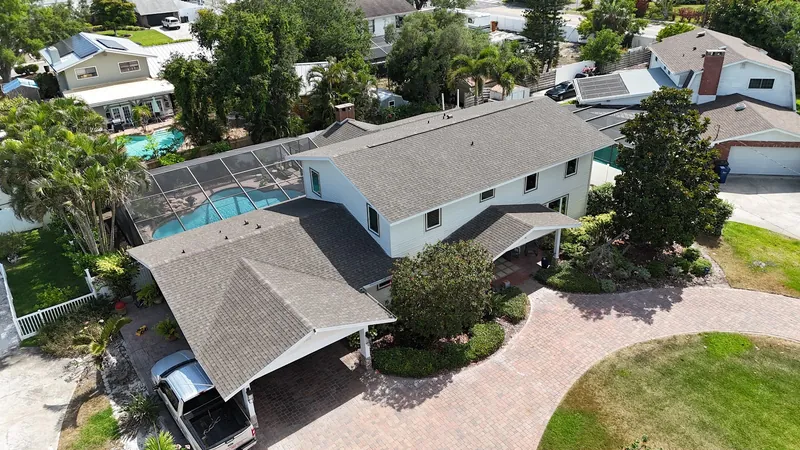
Soft metals around the roof often show hail first. Fresh dents in gutters, downspouts, roof vents and air-conditioner fins can be useful clues, and they can be seen without going up.
What is not hail damage
Plenty of roof marks look like hail and are not. IBHS lists the usual look-alikes:
- Weathering. Granule loss along shingle edges and even, all-over wear or discoloration are normal aging.
- Manufacturing defects in the shingle itself.
- Mechanical damage from installation, tools, foot traffic or anything else people did.
- Heavy rain, which can knock granules loose on its own.
Getting this right matters both ways. Calling wear hail damage is wrong, and so is missing real damage because the roof was old anyway. A fair inspection reports what is there, and if the roof came through the storm fine, the report says so.
Why hail damage matters even without a leak
Hail damage does not always leak on day one. IBHS tested shingles with hail damage for water leakage. Small dents let in negligible water, but large dents let in substantial amounts, and the more severe the tear, the more water came through. Its advice when reroofing is to choose an impact-resistant product with an excellent tear rating.
In this climate a cracked shingle or tile that is still dry in spring can be a leak by the middle of the wet season. That is the case for checking after the storm rather than waiting for a stain.
Source: IBHS, water leakage vulnerabilities for shingles with hail damage (2019 study).
What to do after a hail storm
- Stay off the roof. A wet roof after a storm is slippery, and tile cracks underfoot.
- Photograph the hail if you can, next to a coin or a ruler, and note the date and time.
- Look around the house. Check gutters, downspouts, screens, the AC unit and outdoor furniture for fresh dents, and photograph them.
- Check inside. Look in the attic with a flashlight and check top-floor ceilings for new stains.
- Book an inspection. A licensed roofer on the roof, with dated photographs of what the storm did.
- Stop active water. If water is coming in, a tarp stops the interior damage while a permitted repair is arranged.
Questions about your policy, your deductible or whether to file belong with your insurance company or agent. Florida’s claim deadlines are set by statute, and our insurance roof inspection guide lists them.
What a hail damage roof inspection includes
Our storm damage inspection is one of the four inspections we offer, and it is free. It covers:
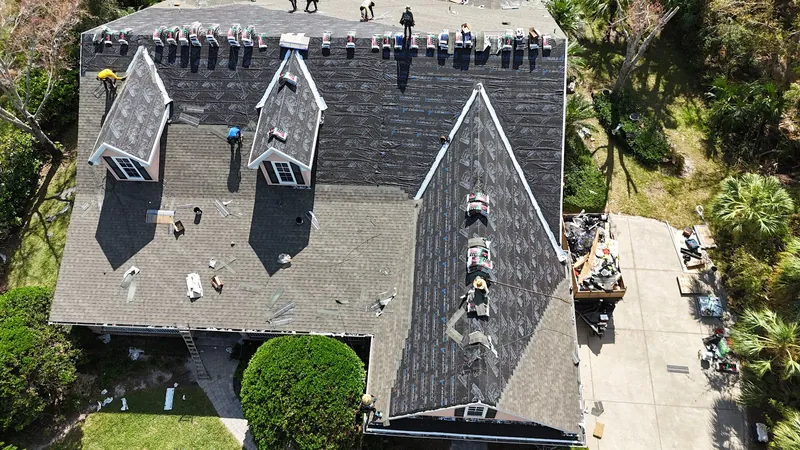
- A DBPR-licensed contractor on the roof, under license CCC1337243, not a salesperson paid on what he finds.
- Every slope and the ridge caps, plus flashings, penetrations, gutters, soffits and fascia.
- Full photographic documentation, with the damage assessed against that specific storm event.
- A dated written report, the same day where we can.
If repairs are needed, we scope them honestly and pull a permit where the work requires one. If damage is extensive or the roof is near the end of its life, we will say so. Our roof inspection checklist shows everything a full inspection works through.
Contractors who knock after a storm
Storms bring crews from out of the area. Florida law sets some clear lines. Under section 489.147 of the Florida Statutes, a contractor may not offer a homeowner a rebate, gift, gift card, cash, coupon, deductible waiver or anything else of value in exchange for inspecting the roof or for making an insurance claim. A contractor also may not interpret your policy or adjust a claim for you unless they hold a public adjuster license.
Before anyone works on your roof, check their license on the Florida DBPR site, and ask for a written, itemized estimate.
Source: Florida Statutes s. 489.147 (2026 edition).
Storm inspections in Southwest Florida
We inspect roofs after storms across the five counties we cover, from Bradenton, Sarasota and North Port in the north to Punta Gorda, Fort Myers, Lehigh Acres and Naples in the south. We are a local team, not a crew that showed up after the last storm.
Had hail or a hard storm come through? Book a free roof inspection, and you keep the photographs and the written report whether or not you hire us. If something needs fixing, our roof repair page explains how we handle it.
Hail damage questions
Does Florida get hail?
Yes, though less often than the Plains. Florida has more thunderstorm activity than anywhere in the country, but the freezing level in its storms is so high that hail often melts before it reaches the ground. Large hail still happens: the Florida Climate Center counts about a dozen reports of hail over 3 inches in the state.
What does hail damage look like on a roof?
On asphalt shingles, IBHS lists a random pattern of impact marks, bruises that feel soft when pressed, and cracks or breaks where hail struck, with ridge caps especially vulnerable. Tile can crack, metal can dent, and flat membranes can bruise or puncture around equipment.
What size hail is considered severe?
NOAA's National Severe Storms Laboratory treats hail of 1 inch, about the size of a quarter, or larger as severe. Whether a given storm damaged your roof depends on the roof as well as the hail, which is why an inspection checks the roof itself.
Does hail damage always cause a leak right away?
No. In IBHS testing, small dents in shingles let in negligible water, while large dents and more severe tears let in substantial amounts. A cracked shingle or tile that is dry today can leak in the next heavy rain, so it is worth checking soon after the storm.
Can a roofer waive my insurance deductible?
No. Florida Statutes section 489.147 bars contractors from offering a deductible waiver, rebate, gift or anything else of value in exchange for a roof inspection or an insurance claim. Questions about coverage and deductibles belong with your insurance company or agent.
How soon after a hail storm should I get my roof inspected?
As soon as it is practical, and before the next heavy rain if you can. Photograph the hail and any dents around the house first, check the attic and ceilings, and stay off the roof yourself.